


Real estate lead generation: a turnkey funnel
From market and competitor analysis to qualified leads in your sales team's Telegram.
Turnkey lead generation
We analyse the market and the competition, prepare at least 15 creatives, build a minimum of four landing pages for different buyer types and launch Meta advertising along the logic of the Andromeda algorithm. Incoming enquiries are qualified by an AI bot: the qualified ones land in the sales team's Telegram group, while a controller bot in the CRM makes sure none of them is lost.
The budget starts at €1,500 a month for advertising. The markets are Türkiye, the UAE, Europe and the CIS. With the full system running, a qualified enquiry costs €35–70.
Let's go through your market and your funnel
We reply within 30 minutes during business hours

Sound familiar?
Cheap enquiries, no deals
JUNK ENQUIRIES
Out of a hundred enquiries only a handful are buyers; the rest are just asking, or bots.
MANAGERS STUCK ON THE PHONE
The day goes on calling through junk, and the people who actually buy get missed.
AN ENQUIRY AT NIGHT
It arrives from another time zone, and by morning the client is already talking to a competitor.
CLICKS INSTEAD OF DEALS
The media buyer shows you reach and shrugs when you ask what a deal costs.
Self-diagnosis
Are you losing leads after the click?
Answer yes or no — the scale will show how far your advertising turns into deals rather than into a drained budget.
Are more than half the enquiries from advertising off-target or bots?
Does the first reply take longer than 15 minutes?
Do enquiries arrive at night from other time zones?
Are fewer than 15 creatives running?
One landing page for every audience at once?
Is anyone checking that managers follow up every enquiry?
Funnel health
100 out of 100
Problem areas: 0
A system, not a setting
We sell the whole funnel, not campaign setup
Expensive enquiries and empty clicks are not an advertising problem. They are the absence of a system, and that system is built before the click. We go through the market and the audience, find the psychological angles from which to approach the buyer, and package the offer so that people want to click it. Advertising like that cuts through banner blindness: people notice it and react.
After that a series of touches does the work. Someone rarely clicks the first time — but they see 5, 10, 15 of our creatives, and each one warms them from a new angle. By the time they get in touch they already consider you an expert: you kept appearing, and always with something relevant. After the click the system continues with the landing pages, the AI bot and oversight of the sales team, so the enquiry is not lost on the way to the deal.
The turnkey funnel
How the funnel works: seven steps
From market analysis to oversight of the sales team. Each step closes off one of the reasons advertising fails to turn into deals.
| Step | What we do | What it does |
|---|---|---|
| 1 | Marketing analysis: buyer profiles, a survey of the competition | The advertising hits the buyer's real pain points rather than an average |
| 2 | At least 15 creatives: half video, half static | Meta's algorithm has something to learn from, and the sets do not burn out |
| 3 | A minimum of four landing pages for different buyer types | An investor and a family with children see different pages |
| 4 | A launch built on Andromeda logic | −32% on cost per lead when rebuilt properly (from Art-Sites' experience) |
| 5 | An AI bot for first-line qualification | Answers in seconds, around the clock, in the client's language |
| 6 | Qualified enquiries go to the managers' Telegram group | The sales team receives a ready profile rather than a number from a form |
| 7 | A controller bot for the sales team inside the CRM | No deal stalls, and the manager sees the whole picture |
Step 1 · Market analysis
A full marketing analysis

We start with the market, not with the ad account. We study demand and competitors, build buyer profiles, go through the client's offer and choose the angles to present it from. The output is a strategy: who we show the advertising to, what we say and why it will work. Two examples from real analysis are below.
An example of the analysis
Buyer profiles
A profile is a portrait of the buyer: their money, their fears and the logic of their decision. Each profile gets its own creatives, its own landing page and its own conversation script. These are the profiles from our analysis for a real estate agency in Dubai — click to open one.
The data here is abridged. A working profile runs to two or three pages: fears, objections, trust triggers, content formats and metrics for each stage of the funnel.
An example of the analysis
We analyse the competition before launch
Rather than guess what content will land with the audience, we go through the people already working on the market. For a real estate agency in Dubai we analysed 50 competitor accounts. What the analysis covers:
- we pull competitors' live advertising from the Facebook Ad Library: offers, formats, landing pages;
- we look at competitors' Google advertising: the ads in the results, the queries they bid on and their landing pages;
- we collect account statistics: posts, Reels, views, likes, comments, engagement;
- we sort the content by popularity and find the formats that collect the most reaction;
- the best accounts we go through by hand: hooks, the structure of the clips, what the audience writes in the comments.
The output is a map of the market: what content competitors are gathering an audience with, which offers they are running and where the free angles are. The creatives are built on that base rather than on a designer's taste.
Step 2 · Creatives
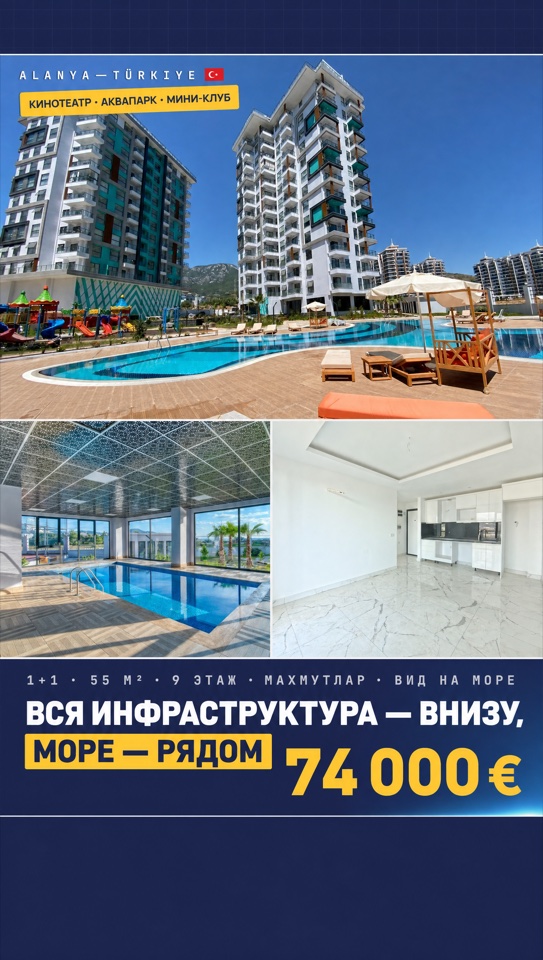
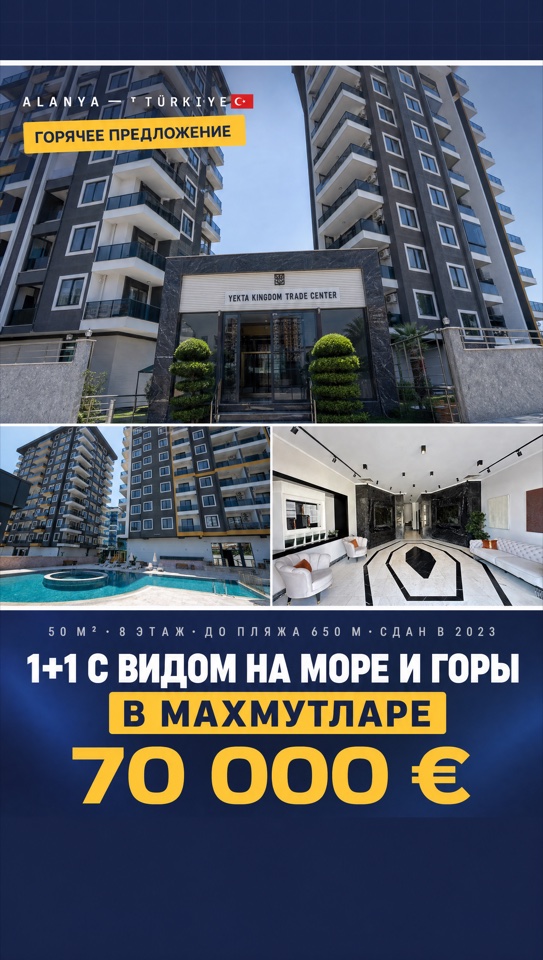
At least 15 creatives per set
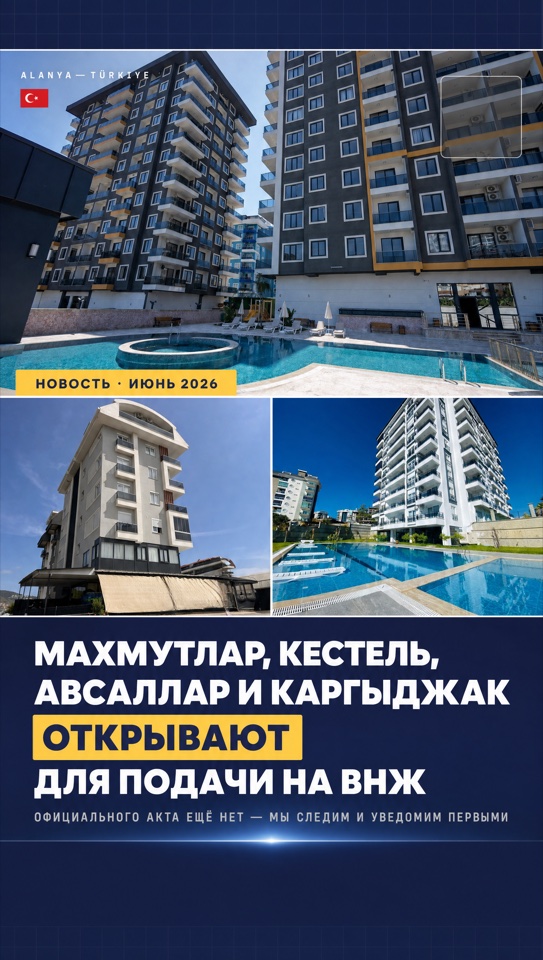
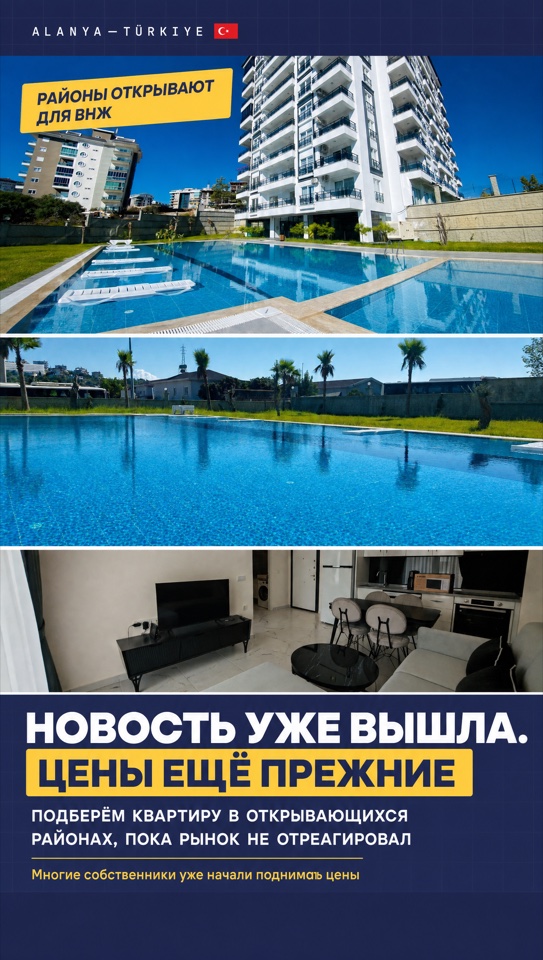
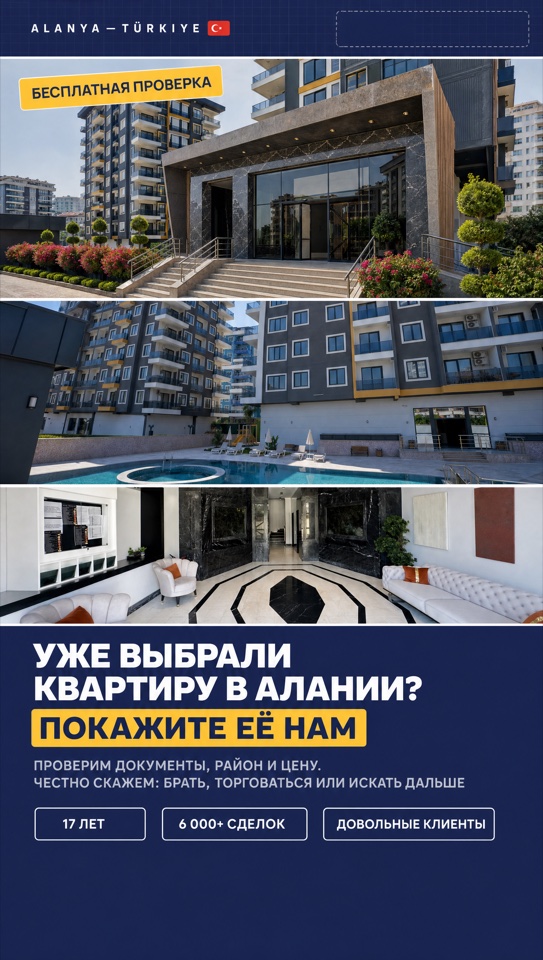
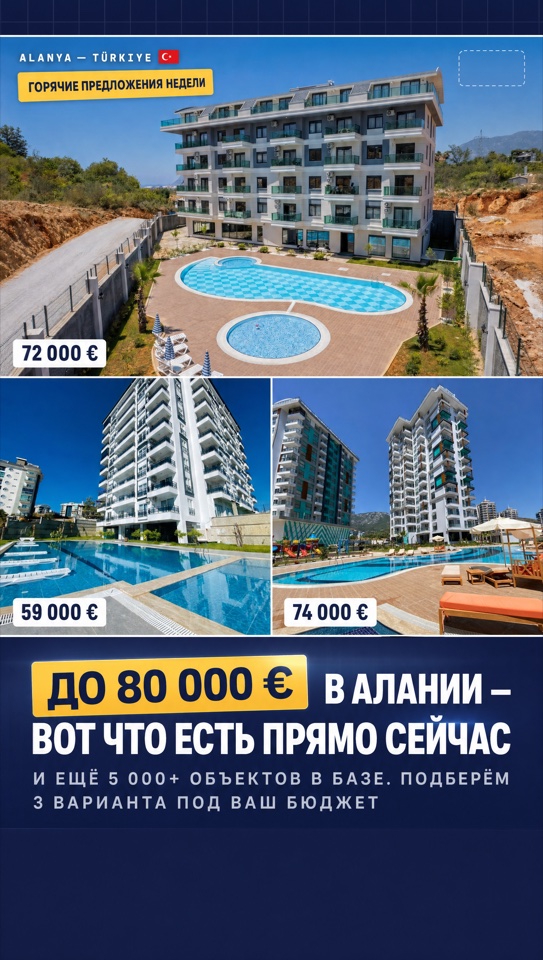
Since Meta updated its algorithms, targeting has moved into the creative: the system finds the audience itself, from the content of the ad. We prepare at least 15 creatives for a launch — half video, half static. Each one hits its own profile and its own angle: yield for the investor, districts and schools for the family, the purchase procedure for the cautious.
Then comes rotation: weak sets are switched off, strong ones are scaled, and burnt-out batches are replaced with fresh ones.
Step 3 · Landing pages
At least four landing pages
One landing page for everyone does not work: the investor calculates yield, the family chooses a district, the residency buyer is afraid of grey schemes. For a project we build at least four landing pages — one per profile, with WhatsApp and Telegram buttons, Pixel and the Conversions API. The person lands on a page that answers their questions rather than average ones.
Example: landing pages by profile
A landing page for every profile
For a real estate agency in Dubai we built a separate landing page for each profile, with its own offer, logic and script. Below are the real pages on desktop and on a phone. Click a screenshot to enlarge it.
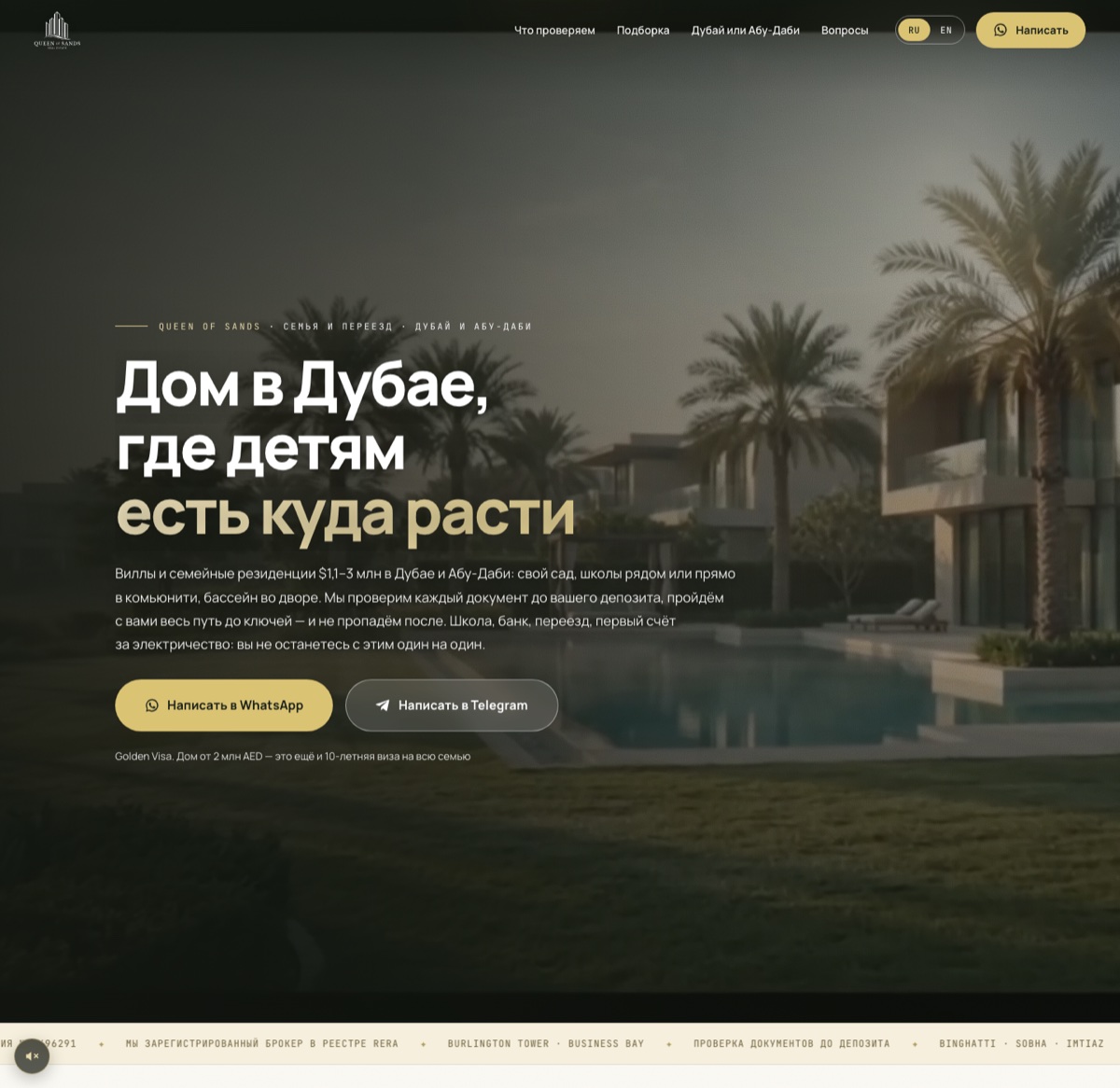
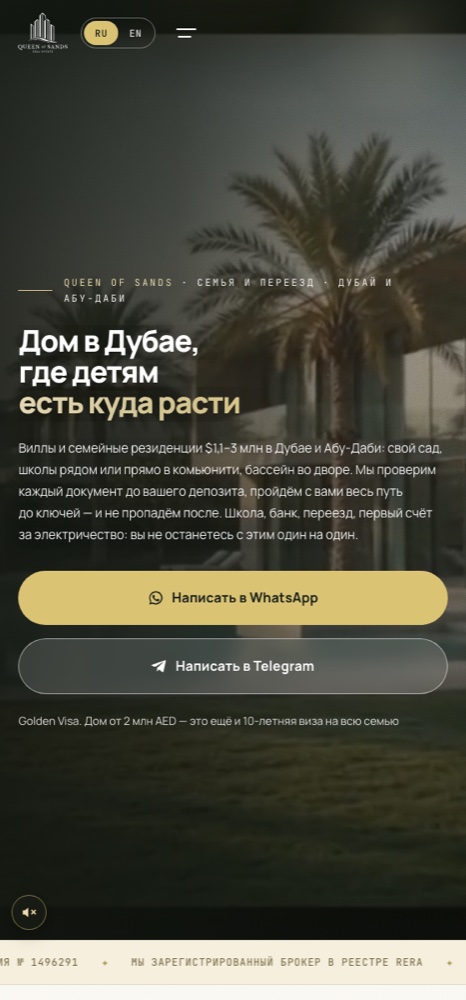
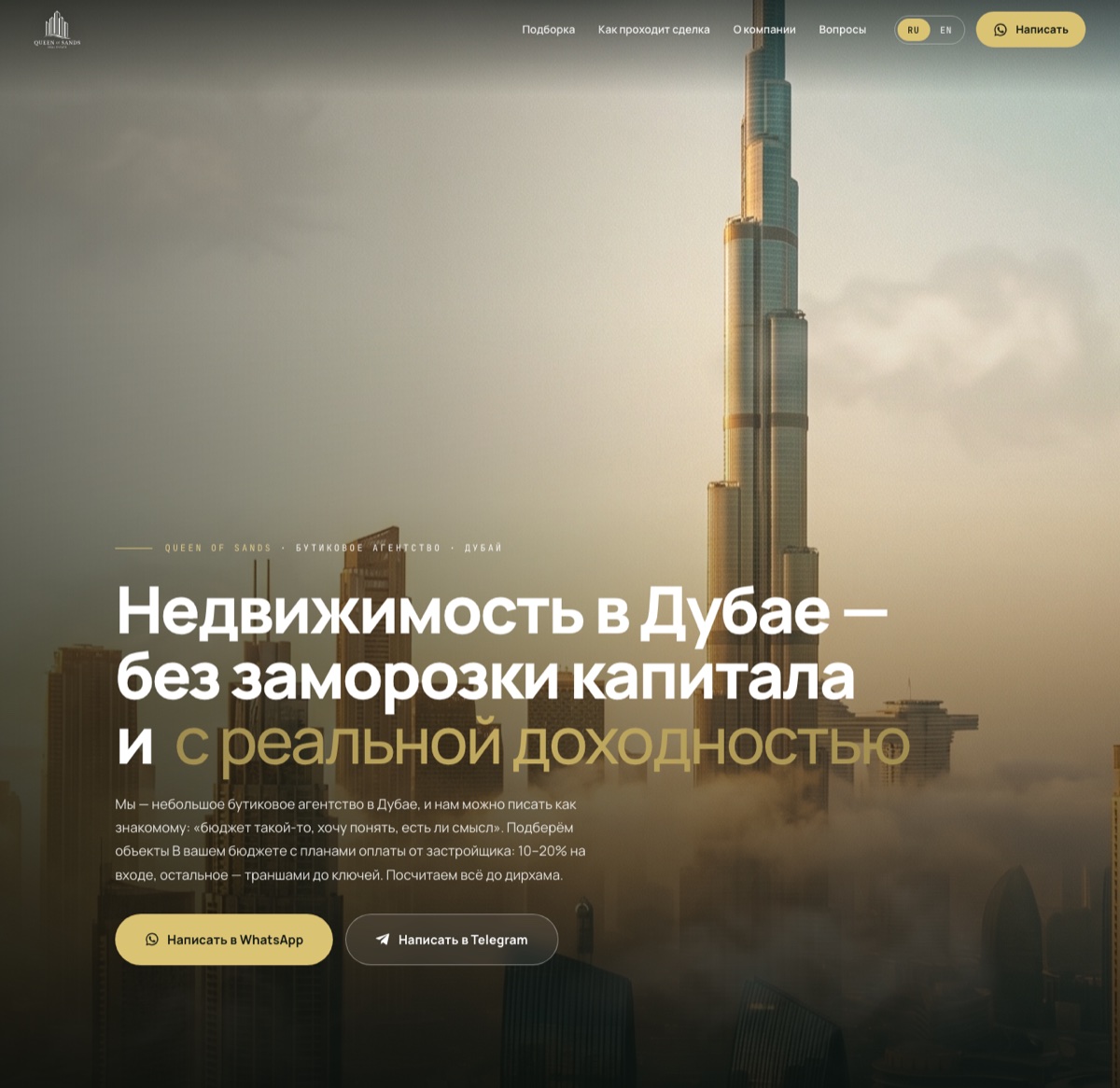

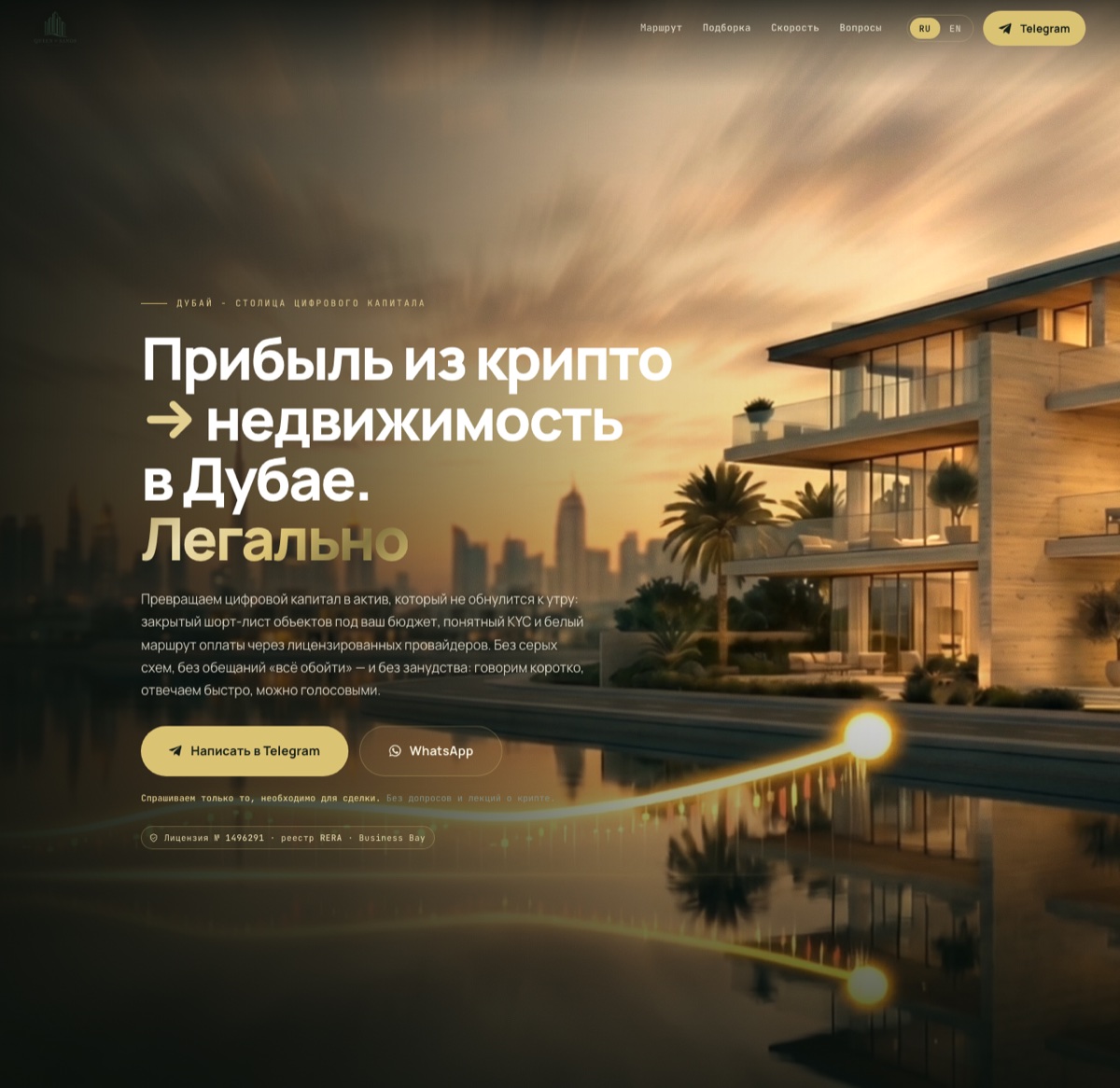
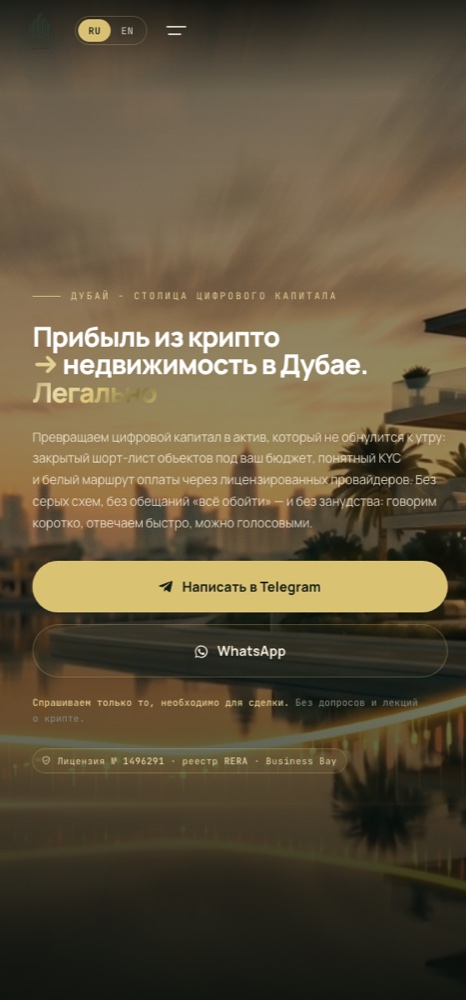
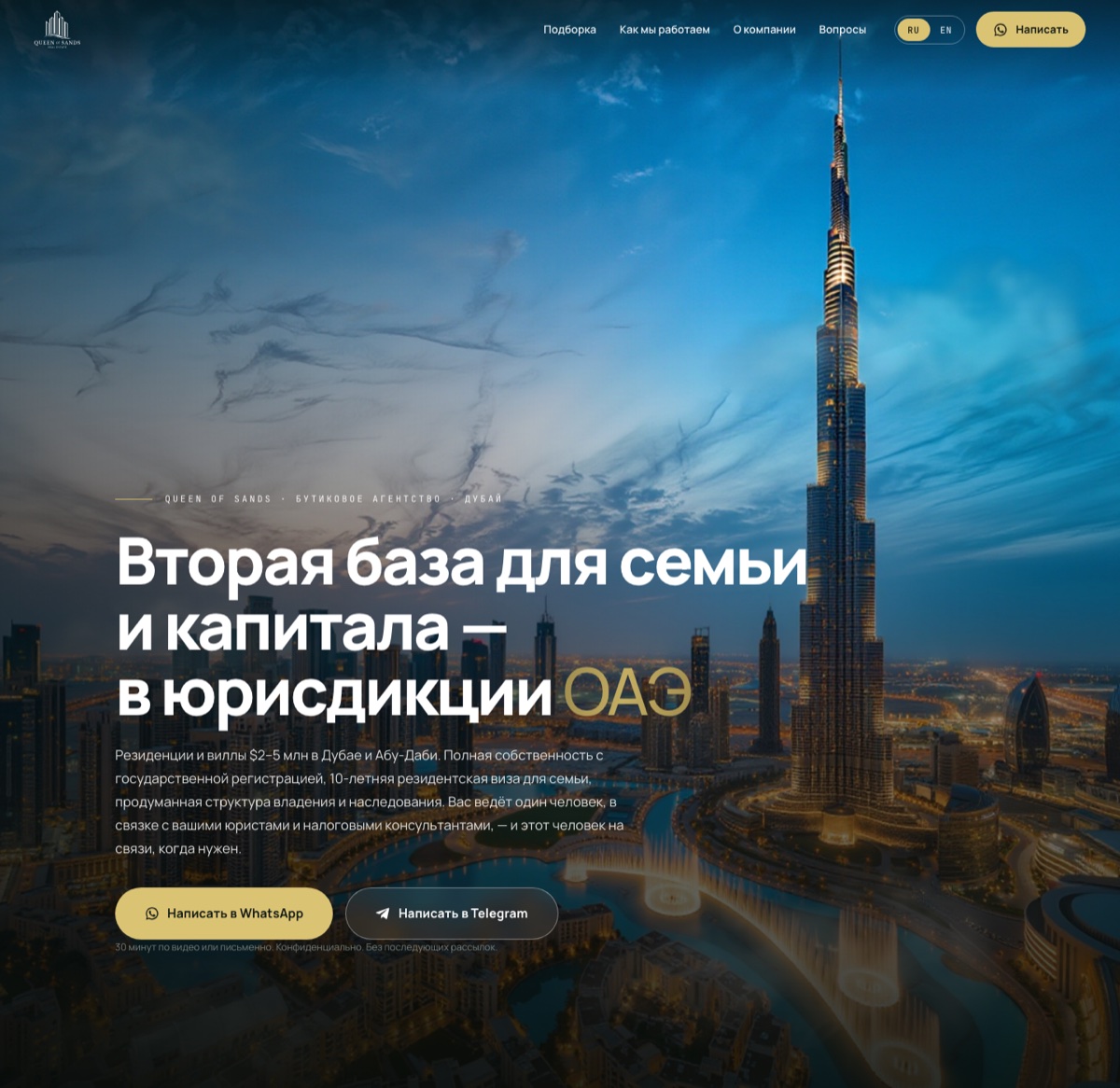
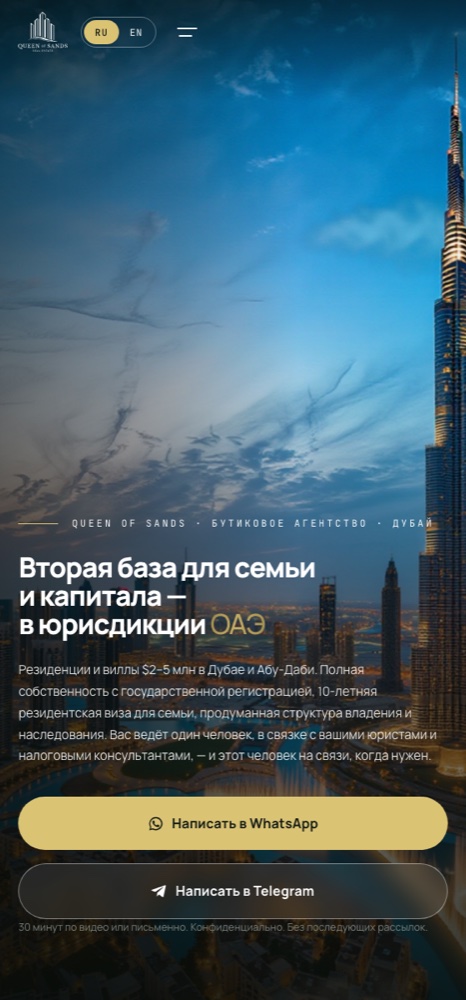
The person lands on a page that answers their questions rather than average ones. That lifts both conversion and the quality of the enquiries.
Step 4 · Launch
A launch built on Andromeda logic
Andromeda is Meta's algorithm that selects the audience from the content of the creatives rather than from targeting checkboxes. We build the account by the 2026 rules: broad audiences, one or two ad sets, server-side events (Pixel + CAPI), and lead quality fed back from the CRM into Meta. In Art-Sites' experience that rebuild gives −32% on cost per lead.
Built by us
The AI bot: first contact in seconds
Incoming enquiries are met by an AI bot of our own making. There are plenty of button-driven bots on the market; there are very few products that hold a conversation like a live colleague. What ours does:
- Answers in seconds, around the clock. An enquiry from another time zone does not go cold by morning.
- Speaks the client's language and identifies it itself — Russian, English, Turkish and dozens more.
- Understands voice messages: it transcribes them and answers on substance.
- Behaves like a person: it shows a typing indicator, waits for the other side to finish the thought and then answers everything at once.
- Runs on an up-to-date knowledge base — properties, prices and answers to standard objections — so the bot replies with the facts of the project.
- Follows up: if the person goes quiet, it reminds them and brings them back into the conversation.
- Qualifies: it asks three to five questions — budget, purpose, district, timing — and filters out spam.
- Hands the manager a lead card: contact details, the parameters of the request, the advertising source and the whole conversation.

The bot strengthens the sales team rather than replacing it: the machine filters and gathers facts, the person sells.
Step 6 · Handing over enquiries
Enquiries go to the managers' Telegram
A qualified enquiry lands in the sales team's Telegram group: budget, purpose, timing, language, the history of the conversation. The manager does not begin with "hello, did you leave an enquiry?" but with a substantive conversation with someone who has confirmed their interest.

Step 7 · CRM oversight
A controller bot for the sales team inside the CRM
We connect a controller bot to your CRM. It watches how fast enquiries are handled, reminds managers about stalled deals directly in Telegram, accepts status updates as voice messages and once a week sends reports to the head of sales and to each manager. In many countries the property sales cycle has grown to nine to twelve months — and over that long, without oversight, leads quietly die.
Built for your project
The funnel is assembled for a specific project: the market, the profiles, the channels and the budgets are different for everyone. We will show what yours would look like and where to start.
Build a funnel for your project
We reply within 30 minutes during business hours
Economics
What the reports show

The figures come from reporting on our clients' 2026 campaigns and are published anonymously. We hold €35–70 not through the right button but through a system: channels working together, creative testing, knowledge of the industry, buyer profiles and a tone of voice.
If the cost of a qualified enquiry starts rising, we see it the same day: the ad accounts are monitored daily and the campaigns are reviewed in depth once a week. We react immediately — changing creatives, sets and bids before the dip eats the budget.
We will give a forecast before launch if we have already worked on that market. But a forecast is a hypothesis: the price is affected by new competitors, by market conditions, by the offer itself and by the platforms' own rules. We do not guarantee figures in advance — there are too many variables. Our job is to hold the cost per enquiry at the minimum the market allows at that moment.
€10–15

An incoming message from paid social
€35–70
Qualified lead: paid social + bot qualification
100–1000
Enquiries a month for developers and agencies — depending on the number of channels and the budget
Calculator
Budget → qualified enquiries
Get a rough sense of the numbers using our benchmarks. The exact calculation comes after we have analysed the market and the buyer profiles.
Below €1,500/month Meta's algorithm never leaves learning mode — there is not enough data to work with, so we do not launch campaigns like that.
Incoming enquiries
Qualified enquiries
Ad impressions a month
Benchmarks from 2026 reporting. Real impressions depend on geography and on the auction; the cost per enquiry depends on the market, the price of the property and the quality of the funnel after the click.

























Why Art-Sites
Why it works with us
SINCE 2013
100+ projects in 12 countries. The core profile is real estate marketing: developers and agencies.
TO THE TOP IN 2–3 YEARS
We have taken clients to the top of their region in two to three years — Alanya is one example. We have worked with major agencies in Türkiye, the UAE, Spain, Georgia and Cyprus.
WE GET INSIDE THE BUSINESS
We run mystery shopping, go through the CRM and the work of the sales team, analyse the proposition — and recommend what to improve inside.
THE BOTS ARE OURS
We build and deploy the AI bot and the CRM oversight ourselves rather than reselling somebody else's subscription.
Questions
Frequently asked questions about lead generation
From €1,500 a month on advertising — that is the learning threshold for Meta's algorithm, around €50 a day. We do not launch cheaper campaigns: the budget burns before the algorithm gathers any data. The team's work is counted separately, and the package is built around the project.
Enquiries come in the first weeks after launch. After that, if the system is set up properly and the project has a strong offer, the quality of the enquiries rises and the price falls. Purchases are a different matter: the property sales cycle is long, so plan around warm leads that the sales team gradually carries to a deal. Purchases in the first month do happen — but that is an exception, not a plan.
Only what is working inefficiently. Once the contract is signed we audit the CRM and the sales team and recommend what to improve. The qualifying bot and the controller are built into your system: enquiries go to your managers and the head of sales receives the reports.
Any. The bot answers in the client's language automatically, and the creatives and landing pages are made for the specific market: Türkiye, the UAE, Europe, the CIS. The geography and the audience are chosen during the analysis stage.
A freelancer is one person. However good they are, they cannot be a marketer, an analyst, a designer, an AI developer, a sales coach and a project manager at once. We bring in a team with real estate experience that covers the whole cycle — physically beyond one person. Yes, it costs more than freelance. But what should be counted is not the price of the work but the cost per qualified lead and the return — and on those metrics the system wins.
That is normal: algorithms change and creatives burn out — what matters is the speed of reaction. We monitor the accounts daily and switch off burnt-out sets before they spoil the data. The bot qualifies every enquiry and the result goes back into Meta, so the algorithm learns to bring people like the qualified ones.
Real estate lead generation — the short version
Lead generation in real estate is a system for bringing qualified enquiries to developers' and agencies' properties: market analysis, creatives, landing pages, advertising on Meta and Google, AI qualification and oversight of handling in the CRM. Art-Sites builds it end to end. We have 100+ projects in 12 countries behind us: we have worked with different markets, audiences and offers, which is why we do not sell universal solutions — the strategy is assembled for each client. The markets are Türkiye, the UAE, Europe and the CIS; search means Google. A qualified lead costs €35–70 — the result of a system rather than a one-off setup.
Related services: paid social for real estate and SEO for real estate websites.
Leave your contact details — we will go through your market and your funnel, put together a preliminary strategy, show which audiences and creative sets will work, and give you a realistic range for the cost of a qualified enquiry.
We reply within 30 minutes during business hours
What types of services are you interested in?
Request a call back
We will contact you shortly

Nikolay
the analyst · 35–45
1. Full personal profile
A composite portrait of the client. Full name: Nikolay Petrov Age: 38 Country / city: Bulgaria, Sofia Nationality: Bulgarian Profession: senior IT operations manager at an international fintech company Source of capital: salary at an international company, savings, property in Bulgaria, investments in local assets Approximate wealth: hypothesis: €500k–€1.2m of investable capital; the working figure confirmed by behaviour is around €200k–€350k as an entry or first instalment, with a willingness to consider a property in the €500k–€900k range given a strong payment plan Family situation: hypothesis: shows no active family influence on the decision in correspondence; acts as an independent buyer Children: insufficient data Lifestyle: a rational urban professional; works long hours, likes technological solutions, does not want to spend time on the chaos of the market; values good service but does not want to overpay for a nice story Preferred environment: international professionals, the IT and finance world, people who speak in numbers Luxury consumption: moderate. Not a classic luxury consumer, but with a clear taste for symbols of status: a high floor, a rooftop pool, Marina or Business Bay, a view, a modern building Habits: reads, compares, asks precise questions, returns to the subject after pauses, checks with banks, weighs alternative scenarios, asks for more options What a day looks like: work in a corporate environment, calls, project tasks; after work, analysing investments, talking to banks, going through presentations, short WhatsApp chats How he spends free time: hypothesis: travel, walking the city, restaurants, sport and the gym, short breaks in Europe Brands: hypothesis: Apple, BMW/Audi, Revolut or Wise, Booking, Emirates or flydubai when travelling, smart casual fashion How he wants to be seen: as someone who understood the market before others did, uses financial leverage intelligently and buys assets without making an emotional mistake
2. Psychological profile
Nikolay thinks in terms of leverage, the moment of entry and protection against the downside. He is not emotionally poor, but he masks emotion with rationality. He is drawn to the idea of an expensive asset for a small entry, because it gives him a sense of financial efficiency. He wants to be an investor who did not simply buy an apartment but assembled the right structure for the deal.
Type of thinking: analytical opportunist. Rationality: high, but filtered through lifestyle. Emotional triggers: limited availability of units, a good payment plan, mortgage support, a call with the developer's manager, honesty from the broker, recognition of his financial logic. Attitude to risk: willing to take it if the payment structure reduces the load. Attitude to wealth: money is an instrument of freedom and control, not only of status. Hidden insecurity: does not want to look like someone who bought at the wrong time or failed to read the market. Internal conflict: wants to enter now, but does not want to lose liquidity. What he is ashamed of: that his current cash flow may not be enough for a fast purchase abroad. What he is trying to prove: that he can scale capital more intelligently than the average investor.
3. Core motivation
To buy an asset in Dubai with a controlled entry, a clear logic of growth, the option of renting or reselling, and minimal damage to his current liquidity.
4. Hidden emotional driver
He wants to feel that he has moved up a level as an investor: not just local property, but an international portfolio asset in a strong jurisdiction.
5. Internal script
I can afford this asset, but I must not be stupid about it. If I put everything in at once, I lose flexibility. If I find the right payment plan, I gain time, keep my capital and enter the market before the others.
6. Primary fear
His primary fear is buying a property that turns into a financial trap: the payments keep coming, liquidity is low, the mortgage was refused and the resale did not work.
7. Surface fears
- "I will not get a mortgage as a non-resident."
- "The payment plan is too heavy."
- "The yield will be lower than promised."
- "I have gone into the wrong district."
- "The best units have already gone."
- "I will pay above market."
- "Now is not the best moment."
8. The psychology of capital
- Money: a resource that has to work, but must not be completely immobilised.
- Risk: acceptable if it is broken into stages.
- Capital: a portfolio instrument; he dislikes committing everything at once.
- Security: transparent documents, comprehensible commission, an honest broker, mortgage support.
- Liquidity: one of his main criteria. A payment plan is a way of preserving it.
- Stability: not an absolute guarantee, but a predictable scenario with a plan B.
9. The psychology of trust
Trust appears when the agent:
- acknowledges the limits and does not promise the impossible;
- explains the reality of a mortgage for a non-resident;
- compares payment plans honestly, including the hidden premium built into instalments;
- does not push, but keeps the pace;
- shows alternatives with different strategies: yield, capital growth, payment flexibility;
- corrects mistakes openly;
- turns the conversation into numbers rather than "Dubai is a growing market".
10. The psychology of status
Status is not his main motive, but it strongly affects the choice. Nikolay may talk about an investment, yet he picks a high floor, a rooftop pool, Marina, Business Bay. For him the property has to be both an investment instrument and a personal trophy. An unprestigious or dull property meets resistance even when the numbers are good.
11. What breaks the deal
- inconsistencies in the numbers, the documents, the commission or the timelines;
- pressure on the deal without any explanation of the downside;
- no evidence on the market, on ownership status, on service charges or liquidity;
- generalities instead of concrete analysis at the level of the individual unit;
- the feeling that the agent is protecting a commission rather than the client's interest;
- delays without explanation and no proactive updates;
- a weak legal framing of the process;
- no clear next step.
12. Purchase triggers
- capital freed up after selling local property;
- an attractive post-handover payment or a 1% monthly plan;
- the option to reserve a unit with a refundable booking;
- rising prices or scarcity in the chosen project;
- a new launch in an area with a growth narrative;
- mortgage approval or a visa route;
- a pause in the market where better terms can be taken.
13. The architecture of the decision
Speed: medium to long; he may come back months later. Emotionality: outwardly rational, inwardly afraid of missing the moment. Who influences him: banks, his existing investments, his personal liquidity, and the agent as a trusted adviser. Data: necessary, but what accelerates the decision is not a spreadsheet — it is numbers plus a payment structure plus trusted guidance. Next step: usually a small commitment: a call, a shortlist, a check on mortgage options, a reservation condition.
14. Objection matrix
| Type | What the client says | What they actually mean | How to close it |
|---|---|---|---|
| Rational | I need to understand the real numbers. | I do not trust a headline yield without a cost structure. | Give a clean model: purchase price, Dubai Land Department fee, agency commission, service charge, rent, vacancy, resale scenario. |
| Rational | Why is this unit more expensive than comparable ones? | I am afraid of overpaying and looking naive. | Show transaction history, current supply, the negotiating range, the alternatives. |
| Financial | Can it be done with a mortgage? | I do not want to freeze all my capital. | Break down the probability of mortgage approval, resident and non-resident scenarios, and the payment plan as a substitute for leverage. |
| Financial | What are all the fees? | I am afraid of hidden payments. | Give a one-page cost breakdown: Dubai Land Department, agency commission, title deed, administration, service charges, DEWA and cooling. |
| Trust | What is your commission? | I am checking where the conflict of interest sits. | Explain the commission transparently and up front, separating what the developer pays on an off-plan purchase from where a commission arises on the secondary market. |
| Legal | Is this full freehold? | I am afraid of buying a limited right rather than ownership. | Send evidence from the Dubai Land Department, the ownership status of the district, and explain freehold versus leasehold. |
| Process | How does a remote purchase work? | I am afraid of losing control if I am not in Dubai. | Give a visual roadmap: Form B, Form F / MOU, deposit, NOC, a trusted representative, power of attorney, the transfer. |
| Emotional | I need to think about it. | This is a big decision and I do not want to get it wrong under pressure. | Take the pressure off, give a structured comparison and a low-commitment next step. |
| Geopolitical | These are unsettled times. | I am afraid of entering just before a crisis. | Content that builds confidence in the market: Dubai Land Department data, demand, liquidity, risk scenarios and the logic of waiting versus entering now. |
| Status | I do not like the low floor or the view. | The property does not match how I see myself. | Segment on lifestyle criteria: view, floor, amenities, brand, the prestige of the community. |
| Investment | What about resale? | I am afraid of getting stuck in an illiquid asset. | Show the depth of the resale market, the buyer pool, the developer's reputation, the entry window before handover, comparable exits. |
| Investment | What about rental? | I want to understand safe net cash flow. | Give rental comparables, the tenant profile, the time to let, the property management process. |
| Trust | I will compare you with other agencies. | I am looking for whoever sells least and protects my interests best. | Give an expert audit of the other options, do not attack competitors, show the criteria for choosing. |
| Process | I am busy right now / in negotiations / at work. | The purchase depends on an external event. | Move to nurturing: a calendar of follow-ups, market updates, a checkpoint without pressure. |
| Emotional | I am not sure Dubai is for me. | I have not pictured myself in that environment. | Give lifestyle immersion: community video, a day-in-the-life narrative, a private viewing. |
15. Voice of the client
Real phrases and likely wording:
- "Let's go through the payment plan in more detail."
- "I would prefer a loan."
- "What support can I get from a UAE bank as a non-resident?"
- "What is your commission?"
- "I can pay the full amount, but I would rather not use all my money at once."
- "The more options you send, the better for me."
- "The payment plan is the priority right now."
- "I need to talk to the banks here."
- "If longer projects give a better potential return, I am open to those."
Internal thoughts:
- "I do not want to be an ordinary buyer who bought into the hype."
- "If I use the instalments properly, I get the asset before I have saved the whole amount."
- "I need someone who will not push a sale on me."
16. Messaging matrix
- Rational: "Let's compare three scenarios — cash, mortgage and payment plan — with the real month-by-month load."
- Emotional: "You keep control of your capital and enter Dubai without having to commit everything at once."
- Authority: "We will show you Dubai Land Department transactions, current supply, the resale logic and the developer's history."
- Anti-fear: "We will say up front where a mortgage is realistic and where you should not build illusions."
- Status: "A high floor, a rooftop or a waterfront position can stay as criteria — we will just check where that does not kill the yield."
- Trust: "If the project does not fit your payment structure, we will say so before the reservation."
- Urgency: "Strong payment plans disappear faster than average units. First we secure the option, then we check the details."
17. Content strategy
Hooks:
- "How to buy property in Dubai without freezing all your capital."
- "Payment plan versus mortgage: what actually works for a non-resident buyer."
- "Why 1% a month can be a good deal — and when it is a trap."
- "Three mistakes investors make buying off-plan in Dubai."
- "How to calculate yield in Dubai: net, not gross."
Narratives: leverage without losing control; Dubai as portfolio diversification; the payment plan as a substitute for smart debt; an honest broker who says plainly when not to buy.
Authority topics: Dubai Land Department data, transaction history, developer comparisons, handover timelines, resale windows, service charges, rental comparables.
Trust-building content: case studies with real payment-plan breakdowns, anti-cases, "why we did not recommend this property", weekly investor notes.
18. Funnel recommendations
- WhatsApp: the main channel; short answers, a document, voice notes, follow-ups without pressure.
- Telegram / email nurturing: investor notes, market reports, alerts on units.
- Long nurturing: essential, since the cycle can stretch to three to six months.
- Concierge selling: checking mortgage options, comparing projects, a call with the developer's manager.
- Investor reports: a necessary element.
- Webinars: "Off-plan property in Dubai for European investors: payment plans, risks, yield."
- CRM segmentation: budget, own funds, mortgage needed, payment-plan priority, timing, preferred exit scenario.
19. Geographic insights
Bulgaria, Romania, Poland, the Czech Republic, the Baltic states and part of Russian-speaking Europe produce clients with growing capital but high sensitivity to liquidity. These markets understand property as a primary investment asset, yet are often not ready for a cash purchase abroad with a high share of own funds. That is why the payment plan and mortgage support become the key entry narrative.
20. Market sensitivity
He reacts most strongly to:
- currency instability;
- mortgage availability;
- pressure from banks;
- inflation;
- headlines about a market correction;
- scarcity on new launches;
- the developer's payment terms;
- geopolitical sentiment;
- data-based reports.
21. Strategic recommendations
- Build a separate funnel: "smart investment in Dubai property with a flexible payment plan".
- Test not only yield in the advertising, but "buy without freezing all your capital".
- Ask in qualification straight away: own funds, mortgage expectations, preferred payment structure, investment horizon.
- Create a calculator for the payment plan and the monthly commitment.
- Build shortlists by strategy rather than by property: fast resale, rental yield, long-term capital growth, flexible plan.
- Put every number in writing after the call.
- Run investor nurturing once or twice a week: a short data update plus one opportunity.

Arman
crypto investor · 31
1. Full personal profile
A composite portrait of the client, with a large share of hypotheses. Full name: Arman Volkov Age: 31 Country / city: Kazakhstan, Almaty; often in Dubai Nationality: Kazakhstani Profession: crypto entrepreneur, DeFi investor, OTC dealmaker and network-based capital allocator Source of capital: profits from crypto assets, token allocations, OTC trading, early-stage Web3 projects, consulting capital Approximate wealth: hypothesis: €1.5m–€6m of liquid but volatile net worth; ready to move €500k–€1.5m into property as a diversification slice Family situation: unmarried, or in a relationship without children Children: none Lifestyle: mobile, fast-moving, drawn to closed communities, rooftop venues, beach clubs, founders' dinners, Telegram groups, conferences, Formula 1 and crypto events Preferred environment: founders, traders, digital nomads, peers of similar wealth, people "from the market" Luxury consumption: conspicuous, but not old money. Likes branded residences, a high floor, sea or skyline views, gym and pool, concierge service, landmark buildings. Habits: reads fast, loses attention fast, dislikes long formal documents, prefers voice notes, Telegram, short decks, charts, screenshots and insider-style updates What a day looks like: a late start, markets, chats and calls, portfolio monitoring, a workout, meetings, dinner with the network, negotiations late into the night Brands: hypothesis: Apple, Ledger, Binance or Bybit, Telegram Premium, Porsche or a Mercedes G-Class, Rolex or Audemars Piguet as status markers, Emirates business class How he wants to be seen: as someone who has already made his money and is now turning volatile capital into visible, respected, real-world capital
2. Psychological profile
Arman lives between high-risk liquidity and a desire for legitimacy. His money can rise and fall quickly, so property in Dubai is for him not only an investment but a psychological materialisation of capital. He wants to turn digital profit into a physical, socially recognised asset.
Type of thinking: fast, asymmetric, narrative-driven. Rationality: selective; he grasps upside quickly but can underestimate legal detail. Emotional triggers: limited downside, a closed allocation, elite access, a branded project, a crypto-friendly payment route, "people like you are buying here". Attitude to risk: high, but risk in property has to look safe compared with crypto. Attitude to wealth: money is speed, freedom and proof of competence. Hidden insecurity: the fear that traditional wealthy circles do not see him as properly wealthy. Internal conflict: he loves liquidity but wants stability and recognition. What he is ashamed of: that part of his capital may be too volatile or hard to explain to traditional institutions. What he is trying to prove: that crypto capital is not an accident but a new form of capital.
3. Core motivation
To buy property in Dubai as a bridge between digital capital and an elite physical lifestyle: status, security, diversification, access to a jurisdiction and to a community.
4. Hidden emotional driver
He wants his money to stop being numbers on a screen and become something recognised by banks, by his family, by the people around him and by himself.
5. Internal script
I have done well in crypto, but part of that capital needs locking in. Dubai understands people like me. If I take the right property, it will be status, security and access to the right environment all at once.
6. Primary fear
His primary fear is waking up after a market crash and realising that digital wealth was never converted into real capital.
7. Surface fears
- "I do not want to go through a long banking ordeal."
- "I do not want to explain the origin of every dollar."
- "I do not want to buy something dull."
- "I do not want to lose the upside by exiting crypto too early."
- "I do not want to end up in something illiquid."
- "I do not want to be treated as an inexperienced young buyer."
8. The psychology of capital
- Money: energy and optionality.
- Risk: his natural environment, but in property he wants a safe wrapper.
- Capital: should be mobile and partly protected.
- Security: jurisdiction, ownership, a visible asset — not banking bureaucracy.
- Liquidity: critical; he dislikes long commitments with no exit.
- Stability: after volatility, it reads as a luxury.
9. The psychology of trust
Trust comes through:
- speed and competence without a bureaucratic tone;
- understanding the reality of a crypto buyer without judgement;
- a clear source-of-funds check and a KYC roadmap;
- closed opportunities and early access;
- the tone of an adviser rather than an estate agent;
- social proof: which founders and investors are buying;
- starting the conversation in Telegram.
10. The psychology of status
Status is the key factor. Arman may talk about diversification, but he looks at the property as proof of success. What matters to him is the view, the brand, the district, the identity of the tower, the neighbours, how it photographs, the private events. A property with poor status kills the deal faster than a weak yield.
11. What breaks the deal
- inconsistencies in the numbers, the documents, the commission or the timelines;
- pressure on the deal without any explanation of the downside;
- no evidence on the market, on ownership status, on service charges or liquidity;
- generalities instead of concrete analysis at the level of the individual unit;
- the feeling that the agent is protecting a commission rather than the client's interest;
- delays without explanation and no proactive updates;
- a weak legal framing of the process;
- no clear next step.
12. Purchase triggers
- a bull cycle in crypto and taking profit;
- regulatory pressure on exchanges or banks;
- wanting residency or a base in Dubai;
- arriving for a crypto conference;
- friends in his circle buying property;
- a change in his relationship;
- a public market crash scare;
- a branded offer, a high floor or a waterfront unit.
13. The architecture of the decision
Speed: fast, once emotion, status and trust line up. Emotionality: high, but masked in the language of diversification. Who influences him: the crypto network, peers, Telegram groups, advisers, sometimes a family office or accountant. Data: needed in short form: a one-page brief, the economics of the deal, the legal path, the key risks. Next step: a private call, a curated shortlist, a VIP viewing, an explanation of payment and KYC.
14. Objection matrix
| Type | What the client says | What they actually mean | How to close it |
|---|---|---|---|
| Rational | I need to understand the real numbers. | I do not trust a headline yield without a cost structure. | Give a clean model: purchase price, Dubai Land Department fee, agency commission, service charge, rent, vacancy, resale scenario. |
| Rational | Why is this unit more expensive than comparable ones? | I am afraid of overpaying and looking naive. | Show transaction history, current supply, the negotiating range, the alternatives. |
| Financial | Can it be done with a mortgage? | I do not want to freeze all my capital. | Break down the probability of mortgage approval, resident and non-resident scenarios, and the payment plan as a substitute for leverage. |
| Financial | What are all the fees? | I am afraid of hidden payments. | Give a one-page cost breakdown: Dubai Land Department, agency commission, title deed, administration, service charges, DEWA and cooling. |
| Trust | What is your commission? | I am checking where the conflict of interest sits. | Explain the commission transparently and up front, separating what the developer pays on an off-plan purchase from where a commission arises on the secondary market. |
| Legal | Is this full freehold? | I am afraid of buying a limited right rather than ownership. | Send evidence from the Dubai Land Department, the ownership status of the district, and explain freehold versus leasehold. |
| Process | How does a remote purchase work? | I am afraid of losing control if I am not in Dubai. | Give a visual roadmap: Form B, Form F / MOU, deposit, NOC, a trusted representative, power of attorney, the transfer. |
| Emotional | I need to think about it. | This is a big decision and I do not want to get it wrong under pressure. | Take the pressure off, give a structured comparison and a low-commitment next step. |
| Geopolitical | These are unsettled times. | I am afraid of entering just before a crisis. | Content that builds confidence in the market: Dubai Land Department data, demand, liquidity, risk scenarios and the logic of waiting versus entering now. |
| Status | I do not like the low floor or the view. | The property does not match how I see myself. | Segment on lifestyle criteria: view, floor, amenities, brand, the prestige of the community. |
| Investment | What about resale? | I am afraid of getting stuck in an illiquid asset. | Show the depth of the resale market, the buyer pool, the developer's reputation, the entry window before handover, comparable exits. |
| Investment | What about rental? | I want to understand safe net cash flow. | Give rental comparables, the tenant profile, the time to let, the property management process. |
| Trust | I will compare you with other agencies. | I am looking for whoever sells least and protects my interests best. | Give an expert audit of the other options, do not attack competitors, show the criteria for choosing. |
| Process | I am busy right now / in negotiations / at work. | The purchase depends on an external event. | Move to nurturing: a calendar of follow-ups, market updates, a checkpoint without pressure. |
| Emotional | I am not sure Dubai is for me. | I have not pictured myself in that environment. | Give lifestyle immersion: community video, a day-in-the-life narrative, a private viewing. |
15. Voice of the client
Likely phrases:
- "Can I pay from crypto or through an OTC deal?"
- "I do not want anything basic."
- "What is the most iconic project under €1.5m?"
- "Who else is buying there?"
- "I need something rational that still looks strong."
- "How quickly can it be reserved?"
- "Is that district genuinely elite, or is it just sold that way?"
Internal thoughts:
- "I do not want my capital to sit only in tokens."
- "I need property that shows the level I am at."
- "I want to be among people playing the big game."
16. Messaging matrix
- Rational: "Lock part of your crypto profit into a freehold asset in Dubai without losing global mobility."
- Emotional: "Turn digital capital into a physical asset and a part of your lifestyle."
- Authority: "We will show the legal route and the KYC path, the developer's reliability and the resale demand."
- Anti-fear: "No grey promises: we check the source-of-funds route in advance."
- Status: "High floor, branded, waterfront, gated community — the property has to match your level."
- Trust: "We do not sell a mass catalogue; we assemble a closed shortlist for your profile."
- Urgency: "The best view units in landmark projects go before the public noise starts."
17. Content strategy
Hooks:
- "Crypto profit → Dubai property: how to lock in capital without losing status."
- "Why crypto investors buy branded residences in Dubai."
- "Three mistakes crypto buyers make purchasing property in the UAE."
- "Dubai as a safe lifestyle base for digital capital."
- "How to pass KYC and buy a real asset when the capital came from crypto."
Narratives: digital capital becoming real-world influence; a status asset; a safe harbour after volatility; Dubai as an elite, crypto-friendly hub.
Authority topics: source-of-funds checks and KYC, ownership, the Golden Visa, branded residences, liquidity, exit strategy, the crypto-to-fiat route.
Trust-building content: closed case studies, interviews with founders, short market notes, Telegram alerts, invitation-only events.
18. Funnel recommendations
- Telegram: the main channel.
- WhatsApp: after qualification.
- Private events: a dinner for crypto founders, an investor breakfast, a project preview.
- Founder branding: a strong format, especially through a personal face for the agency.
- Concierge selling: a curated shortlist plus the legal and payment route.
- Investor reports: short and visual.
- Community strategy: a closed channel, "Dubai property for digital capital".
19. Geographic insights
Kazakhstan, Ukraine and Russian-speaking Europe, Germany, the Baltics, Cyprus, Malta and parts of the Middle East and North Africa all produce profiles with crypto capital: mobile entrepreneurs, traders, Web3 founders, expats. For them Dubai is an obvious assembly point: business, lifestyle, the zero-tax narrative, the network, the events, residency.
20. Market sensitivity
He reacts most strongly to:
- crypto volatility;
- regulation;
- pressure from banks;
- exchange restrictions;
- social proof from founders;
- influencer narratives;
- scarcity in luxury;
- residency and tax narratives.
21. Strategic recommendations
- Do not run generic luxury advertising; build a "digital capital into Dubai property" funnel.
- Write a communication protocol that is safe from a KYC point of view: no promises about bypassing banking procedures.
- Package a closed shortlist: branded, waterfront, landmark towers, high floors.
- Lead with a Telegram funnel built on short analytical cards.
- Build acquisition through events: closed gatherings for crypto founders.
- In the sales script, establish quickly: source of funds, readiness to convert to fiat, timing, the status signal they want.

The Berg family
relocation · 44
1. Full personal profile
A composite portrait of the client, leaning heavily on the correspondence with Staffan, Annalise and Tim. Full name: Staffan Berg Age: 44 Country / city: Malta, San Ġwann; often in Dubai Nationality: Swedish / northern European, resident in Malta Profession: entrepreneur, senior executive and investor; a hypothesis based on the cash purchase, a stay at Atlantis The Royal, a golf tournament and the purchase of a premium apartment Source of capital: business, investments, capital accumulated in Europe Approximate wealth: hypothesis: €2m–€8m net worth; confirmed purchasing power — a readiness to discuss a property at €1.1m–€3m (roughly AED 4–11m) in cash, including villas and townhouses Family situation: married or in a settled partnership Children: at least two, including an older son of about seven — inferred from a conversation about whether the eldest would be comfortable sharing a room in two to four years Lifestyle: premium family living: golf, Atlantis The Royal, Dubai Hills, a furnished apartment, a view, amenities, a quiet district, control over the process Preferred environment: a safe expat community, a golf community, families on a similar income, an international school, well-kept infrastructure Luxury consumption: high but understated. Quality, the view, the district and the service matter more than a loud brand for its own sake. Habits: they compare prices, look at competing listings, ask legal questions, check documents, insist on correct forms, and decide quickly after a viewing and a family discussion What a day looks like: business and management, sport or golf, family planning, travel, property viewings, short messages to the agent How they spend free time: golf, family outings, trips to the malls and around the community, restaurants, travel Brands: hypothesis: Emirates, Atlantis The Royal, BMW / Range Rover / Volvo, Ralph Lauren or Loro Piana for everyday wear, Apple, premium golf brands How they want to be seen: as a rational, comfortable family choosing quality of life, safety for the children and the right environment
2. Psychological profile
Staffan and Annalise are not buying an apartment but a future family system. Aesthetics, daily life, legal protection and long-term family logic are all switched on at once. They may fall for a property, but before the deposit they will check the freehold status, the MOU, Form F, the addendum, the bills, the service charges, any leaks, the warranty, the unit number, the floor and proof of ownership.
Type of thinking: a security-first premium pragmatist. Rationality: high, but the decision depends heavily on the feeling that "this is our way of living". Emotional triggers: a golf course view, furnished, not a low floor, a children's area, a pool, a clubhouse, Dubai Hills, a clean process, the agent's involvement. Attitude to risk: low to medium; ready to pay cash, but not ready to tolerate legal uncertainty. Attitude to wealth: money should buy quality of life and reduce friction. Hidden insecurity: the fear of being foreigners who do not understand the local system and could be taken advantage of. Internal conflict: they want a beautiful home now, but they cannot make a mistake with the paperwork or with the children's future. What they are ashamed of: not getting to grips fast enough with local procedures, where cheques, powers of attorney, a trusted representative and the Dubai Land Department all work differently from Europe. What they are trying to prove: that the family can make mature international decisions without chaos or risk.
3. Core motivation
To create a safe, beautiful, legally clean and practically convenient family base in Dubai that matches the family's current and future standard of living.
4. Hidden emotional driver
They want to feel in control of their children's future, and that what they are buying is not property but calm, space and belonging to the right community.
5. Internal script
This has to be somewhere we will still be happy in three to five years. Not just beautiful today, but safe, properly documented, convenient for the children, with no hidden problems and no feeling that we were taken in somewhere along the way.
6. Primary fear
Their primary fear is buying a beautiful property that turns out, after the deal, to be legally, technically or practically problematic.
7. Surface fears
- "Is this definitely full freehold?"
- "What if there is a leak?"
- "Who is responsible for maintenance?"
- "Is there construction nearby?"
- "What about the service charges?"
- "Why is the price higher than comparable transactions?"
- "The document has to state the unit number and the floor."
- "Are all the bills paid?"
- "What is this addendum?"
8. The psychology of capital
- Money: a means to security and quality of life.
- Risk: must be closed off in writing.
- Capital: not only an investment but family infrastructure.
- Security: the legal side, build quality, the community, warranties, paid bills.
- Liquidity: important, but not more important than the fit with the family.
- Stability: the district, the school, the children, clear ownership rights, reliable maintenance.
9. The psychology of trust
Trust is built through:
- fast, accurate answers;
- a willingness to check the documents;
- admitting mistakes and correcting them;
- being there in person: the pick-up, the viewings, the trustee office, the handover;
- explaining local procedures in plain European terms;
- evidence: the Dubai Land Department, freehold status, Form B and Form F, the addendum, the bills;
- respect for the family discussion.
10. The psychology of status
Status is built into family comfort. They are not looking for loud luxury but for a property that reflects good taste: a golf course view, Dubai Hills, the Atlantis The Royal way of living, quality furnishing, a clubhouse, a children's area, not the lower floors. Status for them means "we made the right grown-up choice", not "look at us".
11. What breaks the deal
- inconsistencies in the numbers, the documents, the commission or the timelines;
- pressure on the deal without any explanation of the downside;
- no evidence on the market, on ownership status, on service charges or liquidity;
- generalities instead of concrete analysis at the level of the individual unit;
- the feeling that the agent is protecting a commission rather than the client's interest;
- delays without explanation and no proactive updates;
- a weak legal framing of the process;
- no clear next step.
12. Purchase triggers
- a trip to Dubai;
- a viewing with a strong emotional fit;
- a family discussion after the viewing;
- a ready property available for a quick move-in;
- a clear discount or room to negotiate;
- confirmation of full freehold and of a clean legal position;
- proximity to golf, schools and facilities for children;
- the chance to settle everything before flying home.
13. The architecture of the decision
Speed: high once the emotional fit is there; before that they may look for a long time. Emotionality: medium to high, but the final decision is formalised through documents. Who influences them: both partners; the spouse's approval is critical. Friends in Dubai may act as a trusted representative or hold power of attorney. Data: documents, transaction history, fees, floor plans, evidence, video. Next step: viewing → family discussion → offer → deposit → legal checks and documents → transfer.
14. Objection matrix
| Type | What the client says | What they actually mean | How to close it |
|---|---|---|---|
| Rational | I need to understand the real numbers. | I do not trust a headline yield without a cost structure. | Give a clean model: purchase price, Dubai Land Department fee, agency commission, service charge, rent, vacancy, resale scenario. |
| Rational | Why is this unit more expensive than comparable ones? | I am afraid of overpaying and looking naive. | Show transaction history, current supply, the negotiating range, the alternatives. |
| Financial | Can it be done with a mortgage? | I do not want to freeze all my capital. | Break down the probability of mortgage approval, resident and non-resident scenarios, and the payment plan as a substitute for leverage. |
| Financial | What are all the fees? | I am afraid of hidden payments. | Give a one-page cost breakdown: Dubai Land Department, agency commission, title deed, administration, service charges, DEWA and cooling. |
| Trust | What is your commission? | I am checking where the conflict of interest sits. | Explain the commission transparently and up front, separating what the developer pays on an off-plan purchase from where a commission arises on the secondary market. |
| Legal | Is this full freehold? | I am afraid of buying a limited right rather than ownership. | Send evidence from the Dubai Land Department, the ownership status of the district, and explain freehold versus leasehold. |
| Process | How does a remote purchase work? | I am afraid of losing control if I am not in Dubai. | Give a visual roadmap: Form B, Form F / MOU, deposit, NOC, a trusted representative, power of attorney, the transfer. |
| Emotional | I need to think about it. | This is a big decision and I do not want to get it wrong under pressure. | Take the pressure off, give a structured comparison and a low-commitment next step. |
| Geopolitical | These are unsettled times. | I am afraid of entering just before a crisis. | Content that builds confidence in the market: Dubai Land Department data, demand, liquidity, risk scenarios and the logic of waiting versus entering now. |
| Status | I do not like the low floor or the view. | The property does not match how I see myself. | Segment on lifestyle criteria: view, floor, amenities, brand, the prestige of the community. |
| Investment | What about resale? | I am afraid of getting stuck in an illiquid asset. | Show the depth of the resale market, the buyer pool, the developer's reputation, the entry window before handover, comparable exits. |
| Investment | What about rental? | I want to understand safe net cash flow. | Give rental comparables, the tenant profile, the time to let, the property management process. |
| Trust | I will compare you with other agencies. | I am looking for whoever sells least and protects my interests best. | Give an expert audit of the other options, do not attack competitors, show the criteria for choosing. |
| Process | I am busy right now / in negotiations / at work. | The purchase depends on an external event. | Move to nurturing: a calendar of follow-ups, market updates, a checkpoint without pressure. |
| Emotional | I am not sure Dubai is for me. | I have not pictured myself in that environment. | Give lifestyle immersion: community video, a day-in-the-life narrative, a private viewing. |
15. Voice of the client
Real phrases and patterns:
- "Is it sold furnished?"
- "Can you send the location pin?"
- "Is there a parking space in this building?"
- "Is there access to the pool and the amenities?"
- "Are there any construction sites next to this building?"
- "We do not want the lower floors."
- "Why is this apartment so much more expensive?"
- "Let's make an offer."
- "Say there is a water leak in the bathroom — will building maintenance deal with it?"
- "Can you check whether this property is full freehold?"
- "The document must state the unit number and the floor."
- "What does this addendum mean?"
Internal thoughts:
- "We are foreigners here; we have to check everything."
- "Beautiful, yes — but what happens after the purchase?"
- "It has to work for the children and not create problems for the family."
16. Messaging matrix
- Rational: "A full roadmap of the transaction with the documents, the fees, the service charges, the warranties and the bills, all before the deposit."
- Emotional: "A home where the children will be comfortable growing up and where you can live calmly."
- Authority: "We check the ownership status, Dubai Land Department data, the developer's reputation, the building handover and the maintenance rules."
- Anti-fear: "Before you pay, you receive proof of full freehold, the details of the unit and the seller's obligations."
- Status: "Dubai Hills, a golf course view, a clubhouse, quality furnishing — family living without unnecessary noise."
- Trust: "We accompany you not only through the choice but through the whole process to the keys."
- Urgency: "If the property suits the family, it is worth securing the offer before comparable units go."
17. Content strategy
Hooks:
- "How to choose a Dubai district for a family — by daily life, not by the advertising."
- "Freehold, service charges, Form F: what to check before the deposit."
- "Dubai Hills for a family: what to know before buying."
- "Why the view and the floor are not only aesthetics but liquidity."
- "The full path of a secondary-market purchase in Dubai for a European family."
Narratives: family safety; a guide for the European buyer; the lifestyle of a community; legal clarity; from the viewing to the keys.
Authority topics: freehold versus leasehold, service charges, warranties, DEWA, cooling, the NOC, the trustee office, power of attorney, schools and communities.
Trust-building content: checklists, video tours, guides to family districts, "the documents explained", handover stories from clients.
18. Funnel recommendations
- A WhatsApp group: the best format, because the decision is a family one.
- Concierge selling: the pick-up, the show apartment or sales office, a document pack.
- Long nurturing: family guides to the districts.
- Relocation consulting: schools, healthcare, pets, driving, visas.
- Founder and agent trust: a personal, named presence.
- Referrals: very strong after a successful handover.
- CRM segmentation: family size, children's ages, school requirements, district preferences, cash or mortgage, readiness to visit.
19. Geographic insights
Malta, Spain, Germany, Austria, the UK and northern Europe produce family buyers used to legal structure, transparency, bank transfers, documentation and a high level of trust in formal process. They may have the capital, but they need the Dubai process explained without local jargon. What matters to them is Dubai Hills, Emirates Living, Arabian Ranches, Tilal Al Ghaf, Sobha Hartland, green communities, schools, golf and shopping.
20. Market sensitivity
They react most strongly to:
- safety narratives;
- schools and community infrastructure;
- service charges;
- legal clarity;
- geopolitical calm;
- maintenance and warranty;
- the security of the transaction;
- media narratives about the Dubai market;
- the availability of ready and furnished units.
21. Strategic recommendations
- Build a separate "family buyer with concierge support" funnel.
- Advertising: green communities, schools, safety, family living, clarity on freehold.
- Landing page: "Buy a family home in Dubai with full legal and relocation support."
- Sales process: create a WhatsApp group with both decision-makers from the start.
- Materials: guides to family districts, a guide to the purchase documents, a checklist for a secondary-market deal.
- Nurturing: a monthly digest of the best family communities in Dubai.
- Trust building: ask for a referral and a review after the deal — a family buyer gives high-quality referrals.

Viktor
capital and taxes · 52
1. Full personal profile
A composite portrait of the client, supported by a strategic hypothesis. Full name: Viktor Schneider Age: 52 Country / city: Germany, Munich; considering Dubai as a second base Nationality: German, with an international business Profession: owner of a mid-market manufacturing or export business, or of a multi-country consulting and holding structure Source of capital: an operating business, retained profit, dividends, capital exits, commercial property in Europe Approximate wealth: hypothesis: €8m–€35m net worth; a property budget in Dubai of €2m–€5m — the upper middle of the market rather than ultra-luxury Family situation: married, with teenage or student-age children Children: two Lifestyle: discreet capital: private banking, family office advisers, tax consultants, business travel, premium but restrained consumption Preferred environment: entrepreneurs, private bankers, legal and tax advisers, family office circles, golf and private clubs, peers with global mobility Luxury consumption: high but not demonstrative. He prefers quality, privacy, service, security and dependable brands over loud luxury. Habits: does not respond to mass advertising; reads analytical reports, consults his lawyer and tax adviser, checks the ownership structure, the privacy and the exit What a day looks like: business decisions, calls with the CFO and the tax adviser, private banking, sport, dinner with family or partners, following the macro news How he spends free time: golf, yachting, ski trips, fine dining, private events, travel with the family Brands: hypothesis: a Mercedes S-Class or a Porsche, Lufthansa or Emirates business class, Patek Philippe or a discreet Rolex, Loro Piana or Brunello Cucinelli, UBS, Julius Baer or HSBC-style banking How he wants to be seen: as someone who protects his family, his capital and his business ahead of tax, banking and geopolitical instability
2. Psychological profile
Viktor is not buying an apartment in Dubai. He is buying an option on a new jurisdiction. Property is an instrument of access: residency, banking flexibility, asset protection, a family base, tax planning, business succession. He dislikes emotional pressure. His trust is not bought with a good-looking Reel but with the quality of the service, legal maturity and the ability to talk to his advisers.
Type of thinking: strategic, defensive, jurisdictional. Rationality: very high. Emotional triggers: protecting capital, tax efficiency, a safe haven, the Golden Visa, family safety, relocating the business, privacy. Attitude to risk: low on the legal side, medium on investment. Attitude to wealth: wealth is a responsibility that has to be protected. Hidden insecurity: the fear of losing control to a government, to banks, to regulators or to the tax environment. Internal conflict: he wants optimisation but does not want to look like someone running from taxes. What he is ashamed of: having to think about protecting capital rather than only about growing the business. What he is trying to prove: that he is acting as a strategist rather than out of panic.
3. Core motivation
To create a legally and financially secure foothold in Dubai: for capital, for the family, for tax planning, for the business and for future mobility.
4. Hidden emotional driver
He wants to sleep soundly knowing his family has a backup jurisdiction and an asset outside the pressure zone of his main country.
5. Internal script
The world is changing faster than it used to. You cannot keep everything in one country, one banking system and one tax framework. Dubai should not be a purchase but a safety circuit.
6. Primary fear
His primary fear is being locked into an unfavourable jurisdiction: taxes rising, banks making operations harder, the business squeezed, and no alternative for the family.
7. Surface fears
- "What are the taxes?"
- "What does the Golden Visa actually give you?"
- "Can it be held by a company or by an individual?"
- "How does the bank transfer work?"
- "What documents are required?"
- "How quickly can it be bought remotely?"
- "Is there a property tax?"
- "What happens with inheritance and ownership?"
- "How safe is the UAE?"
8. The psychology of capital
- Money: not simply income but the architecture of family security.
- Risk: legal risk is unacceptable; market risk is acceptable with a strong asset.
- Capital: should be spread across jurisdictions.
- Security: the law, ownership, tax clarity, political stability, banking access.
- Liquidity: important, but secondary to a safe jurisdiction.
- Stability: a strong state, clear rules, asset protection.
9. The psychology of trust
Trust appears when the agency works as an investment and relocation concierge rather than as a broker:
- speaks the language of his advisers;
- gives legal and tax caveats and brings in specialist partners;
- explains ownership, the Dubai Land Department, the Golden Visa and the transaction process;
- shows premium but conservative assets;
- does not promise a tax scheme without a lawyer;
- prepares a document pack for the CFO and the lawyer;
- maintains privacy and confidentiality.
10. The psychology of status
Status matters as a signal of solidity rather than as conspicuous consumption. Viktor does not want a showy Dubai. He wants a respected address: Palm, Downtown, Dubai Hills, Creek Harbour, close to the DIFC, a branded or high-quality developer. His status is privacy, control, access and quality.
11. What breaks the deal
- inconsistencies in the numbers, the documents, the commission or the timelines;
- pressure on the deal without any explanation of the downside;
- no evidence on the market, on ownership status, on service charges or liquidity;
- generalities instead of concrete analysis at the level of the individual unit;
- the feeling that the agent is protecting a commission rather than the client's interest;
- delays without explanation and no proactive updates;
- a weak legal framing of the process;
- no clear next step.
12. Purchase triggers
- tax pressure in his country of residence;
- banking restrictions;
- the sale of a business or a dividend event;
- planning a relocation for the family;
- geopolitical risk in Europe;
- increasing regulation;
- a conversation with a tax adviser about diversifying residency;
- coming to Dubai for a business event;
- wanting the Golden Visa.
13. The architecture of the decision
Speed: slow until trust is established, fast once the adviser approves. Emotionality: low on the surface; internally driven by the fear of losing control. Who influences him: his spouse, a tax lawyer, a private banker, the CFO, the family office, sometimes the children. Data: a legal note, a tax overview, options for the ownership structure, district analysis, liquidity, property management. Next step: a private consultation → a pack for the advisers → a shortlist → a visit to Dubai → the structure → the purchase.
14. Objection matrix
| Type | What the client says | What they actually mean | How to close it |
|---|---|---|---|
| Rational | I need to understand the real numbers. | I do not trust a headline yield without a cost structure. | Give a clean model: purchase price, Dubai Land Department fee, agency commission, service charge, rent, vacancy, resale scenario. |
| Rational | Why is this unit more expensive than comparable ones? | I am afraid of overpaying and looking naive. | Show transaction history, current supply, the negotiating range, the alternatives. |
| Financial | Can it be done with a mortgage? | I do not want to freeze all my capital. | Break down the probability of mortgage approval, resident and non-resident scenarios, and the payment plan as a substitute for leverage. |
| Financial | What are all the fees? | I am afraid of hidden payments. | Give a one-page cost breakdown: Dubai Land Department, agency commission, title deed, administration, service charges, DEWA and cooling. |
| Trust | What is your commission? | I am checking where the conflict of interest sits. | Explain the commission transparently and up front, separating what the developer pays on an off-plan purchase from where a commission arises on the secondary market. |
| Legal | Is this full freehold? | I am afraid of buying a limited right rather than ownership. | Send evidence from the Dubai Land Department, the ownership status of the district, and explain freehold versus leasehold. |
| Process | How does a remote purchase work? | I am afraid of losing control if I am not in Dubai. | Give a visual roadmap: Form B, Form F / MOU, deposit, NOC, a trusted representative, power of attorney, the transfer. |
| Emotional | I need to think about it. | This is a big decision and I do not want to get it wrong under pressure. | Take the pressure off, give a structured comparison and a low-commitment next step. |
| Geopolitical | These are unsettled times. | I am afraid of entering just before a crisis. | Content that builds confidence in the market: Dubai Land Department data, demand, liquidity, risk scenarios and the logic of waiting versus entering now. |
| Status | I do not like the low floor or the view. | The property does not match how I see myself. | Segment on lifestyle criteria: view, floor, amenities, brand, the prestige of the community. |
| Investment | What about resale? | I am afraid of getting stuck in an illiquid asset. | Show the depth of the resale market, the buyer pool, the developer's reputation, the entry window before handover, comparable exits. |
| Investment | What about rental? | I want to understand safe net cash flow. | Give rental comparables, the tenant profile, the time to let, the property management process. |
| Trust | I will compare you with other agencies. | I am looking for whoever sells least and protects my interests best. | Give an expert audit of the other options, do not attack competitors, show the criteria for choosing. |
| Process | I am busy right now / in negotiations / at work. | The purchase depends on an external event. | Move to nurturing: a calendar of follow-ups, market updates, a checkpoint without pressure. |
| Emotional | I am not sure Dubai is for me. | I have not pictured myself in that environment. | Give lifestyle immersion: community video, a day-in-the-life narrative, a private viewing. |
15. Voice of the client
Likely phrases:
- "First I need to understand the legal structure."
- "What is the annual tax here?"
- "Can my adviser join the call?"
- "Is this 100% full freehold?"
- "I do not want a speculative property."
- "For me this is more about relocation and protecting capital."
- "Send me a short note, not a brochure."
Internal thoughts:
- "I need an alternative to Europe."
- "I do not want to keep my family and my capital in one system."
- "If I do this, the process has to be flawless."
16. Messaging matrix
- Rational: "Property in Dubai is a regulated asset with a clear transaction process and no annual property tax."
- Emotional: "A secure jurisdictional base for your family and your capital."
- Authority: "The Dubai Land Department process, a broker registered with the Dubai property regulator, legal partners, the Golden Visa route, ownership documentation."
- Anti-fear: "No aggressive promises — only a documented process and materials ready for your advisers."
- Status: "Discreet premium addresses for families and business owners."
- Trust: "A private advisory process with legal, mortgage, banking and relocation partners."
- Urgency: "Jurisdictional planning is better done before it becomes urgent."
17. Content strategy
Hooks:
- "Dubai as a safe haven for European entrepreneurs."
- "Real property, the Golden Visa and protecting capital: what business owners need to know."
- "How to buy property in Dubai without legal uncertainty."
- "Why wealthy families are building a second base in the UAE."
- "Freehold, taxes, ownership and remote purchase: Dubai property for business founders, in plain language."
Narratives: protection before the pressure arrives; a second base; family security; business succession; asset diversification.
Authority topics: the Golden Visa, tax advantages, the legal process, freehold, inheritance, company versus individual ownership, banking questions, remote purchase, property management.
Trust-building content: private notes, webinars with lawyers, relocation checklists, case studies of wealthy clients, confidential video briefings.
18. Funnel recommendations
- Concierge selling: essential.
- Founder branding: strong, but it has to be substantive and discreet.
- Private events: tax and relocation breakfasts in Malta, Spain, Germany and Austria.
- Webinars: with legal and tax partners, not mass sales webinars.
- Investor reports: a macro overview plus legal context plus a shortlist of properties.
- Referrals: from lawyers, tax advisers, private bankers and existing clients.
- CRM segmentation: tax motivation, interest in residency, business ownership, adviser involvement, level of confidentiality, budget.
19. Geographic insights
Spain, Malta, Germany, Austria, the UK and Russian-speaking Europe can all generate capital-relocation clients, because that is where entrepreneurs, expats, business owners and wealthy families sensitive to tax, regulation, banking compliance and geopolitics are concentrated. Dubai offers them a narrative: security, no personal income tax, ownership, the Golden Visa, international schools and access to a business environment.
20. Market sensitivity
He reacts most strongly to:
- taxes;
- regulation;
- pressure from banks;
- currency instability;
- geopolitical risk;
- media narratives about Europe and the MENA region;
- Golden Visa rules;
- safe-haven positioning;
- advisers' recommendations.
Order a consultation